
Broward County has thirty-one municipalities and one judicial circuit. Fort Lauderdale is the county seat and the largest city, but not by much. Pembroke Pines, out west, and Hollywood are close behind, and most of the county lives somewhere else.
So the work is spread out, and the courts are spread out to match.
One Circuit, Four Courthouses
The Seventeenth Judicial Circuit of Florida is Broward’s alone. The county’s own page on the circuit lists 58 circuit judges and 33 county judges.
The main address is 201 SE 6th Street in downtown Fort Lauderdale. It is the Broward County Courthouse, and it is really several buildings. Family, probate and evictions go to the West Building, felonies to the North, jurors to the third floor of the East. Marriage licenses and ceremonies are a short walk off, in the Midrise Building at 540 SE 3rd Avenue.
Then come the three regional courthouses, named by the compass.
The North Regional Courthouse is at 1600 West Hillsboro Boulevard in Deerfield Beach. The West Regional Courthouse is at 100 North Pine Island Road in Plantation. The South Regional Courthouse is at 3550 Hollywood Boulevard in Hollywood. Each one hears traffic, misdemeanor and county civil cases, and the Clerk lists circuit civil and probate filings among the services at each. You can also apply for a passport or be married at any of the three. The Clerk’s regular hours at all of them are 8:00 a.m. to 3:30 p.m., Monday through Friday.
Federal cases go downtown too. The Fort Lauderdale division of the U.S. District Court for the Southern District of Florida sits in the U.S. Federal Building and Courthouse at 299 East Broward Boulevard. The court tells Tri-Rail riders to get off at the Broward Boulevard station and take the shuttle bus east.
That address is due to change. A new federal courthouse has been going up at 315 Southeast 11th Street, on the Tarpon River: twelve courtrooms and seventeen judges’ chambers, by the General Services Administration’s count, with the mangroves along the bank kept in place. The agency projected completion for fall 2026. As this is written, in late November 2026, the court’s website still sends visitors to Broward Boulevard. Look before you drive.
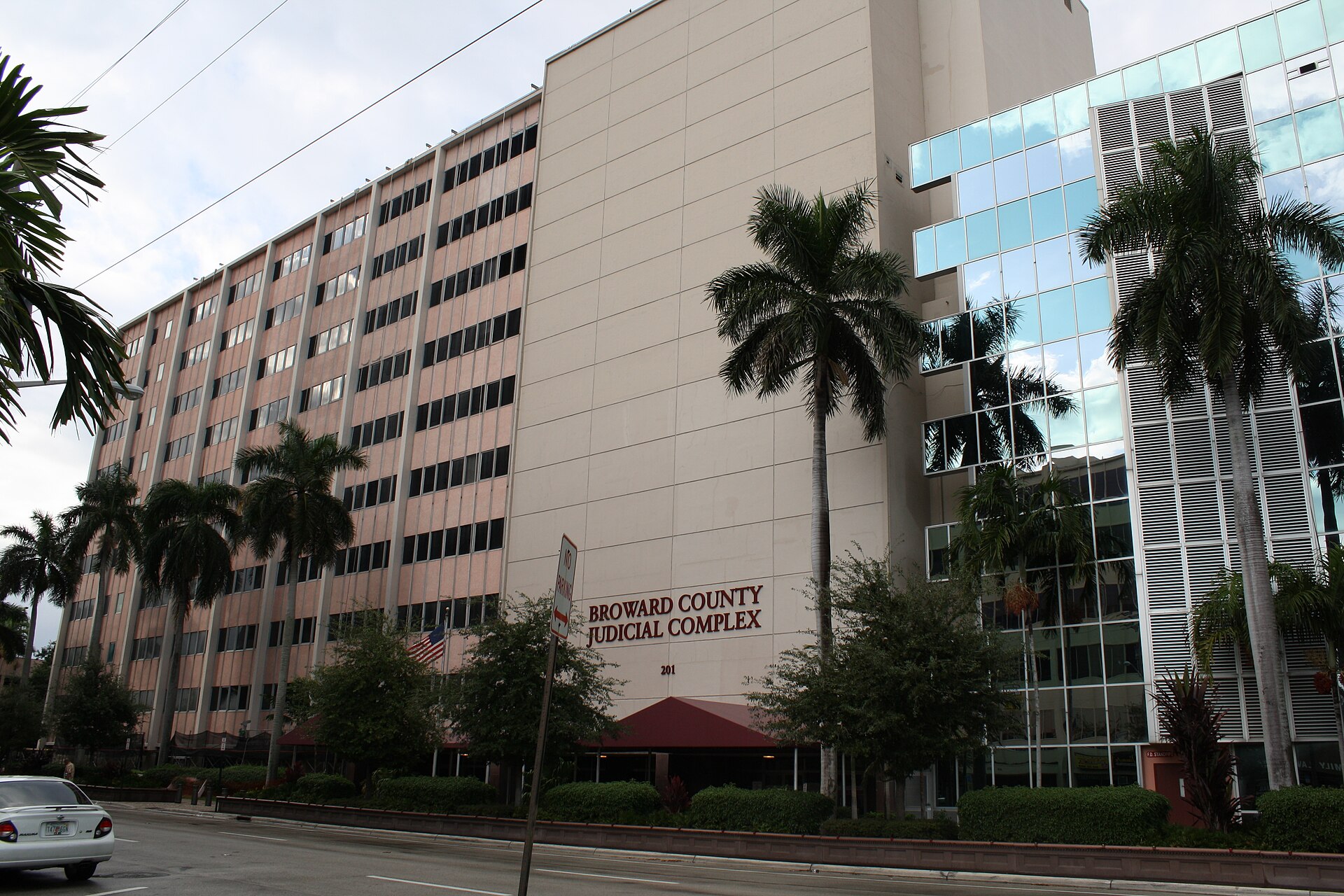
Photo: Georgia Guercio, CC BY-SA 3.0, via Wikimedia Commons
The River and the Boulevard
Downtown Fort Lauderdale grew up on the New River, and the oldest piece of that story is still standing at 335 SE 6th Avenue. Frank Stranahan came from Ohio in 1893 and built a two-story house on the riverbank in 1901. The ground floor was his trading post. Upstairs was the community hall. He had married the settlement’s schoolteacher, Ivy Cromartie, the year before. Frank died in 1929. Ivy stayed on in the house and died in 1971. It has been a museum since 1984.
The Riverwalk follows the same river through downtown. On the first Sunday of each month, the Riverwalk organization lists a free jazz brunch at Esplanade Park, 11 in the morning to 2 in the afternoon.
Las Olas Boulevard starts downtown at SW 1st Avenue and runs two and a half miles east to State Road A1A at the beach. The name is Spanish for “the waves.” The commercial stretch in the middle is where people park once and stay: galleries, boutiques, sidewalk tables. The visitor bureau calls it “the shoppers’ paradise.” Visitor bureaus talk that way. The boulevard has earned some of it.
Down the Coast, and Inland
Hollywood has the Broadwalk. The spelling is deliberate. Joseph Young, who founded the city, had the walkway built, and by 1923 it was a strip of pink cement along the ocean, already called the Broadwalk. The American Planning Association named it one of its Great Public Spaces in 2013 and measured it at about two and a half miles, from Jefferson Street to Sherman Street. The terra cotta pavers date from a 2007 redesign. At Johnson Street stands the Hollywood Beach Theatre, where the city advertises free live music five nights a week.
Pompano Beach raised and widened its pier and dedicated it on April 2, 2022, as the Fisher Family Pier. It runs more than 900 feet, and part of it is laid out in the shape of a pompano, the fish the city is named for. The city’s posted hours are 7 in the morning to 10 at night, every day. Walking out costs nothing. Fishing costs $7, and the city notes that no Florida license is needed from the pier.
Deerfield Beach has a pier of its own, the International Fishing Pier, 976 feet long. The same city holds the North Regional Courthouse, so a morning on Hillsboro Boulevard can end with a walk over the water.
In Dania Beach, on the west side of U.S. 1, Monroe Udell opened Jaxson’s Ice Cream Parlour in 1956. His daughter owns it now, and the city named a street for him. The house specialty is the Kitchen Sink, a sundae for four that arrives at the table in an actual sink.
And Davie, inland, marked its centennial on November 8, 2025. The town held the party at the Bergeron Rodeo Grounds. That tells you something about Davie.
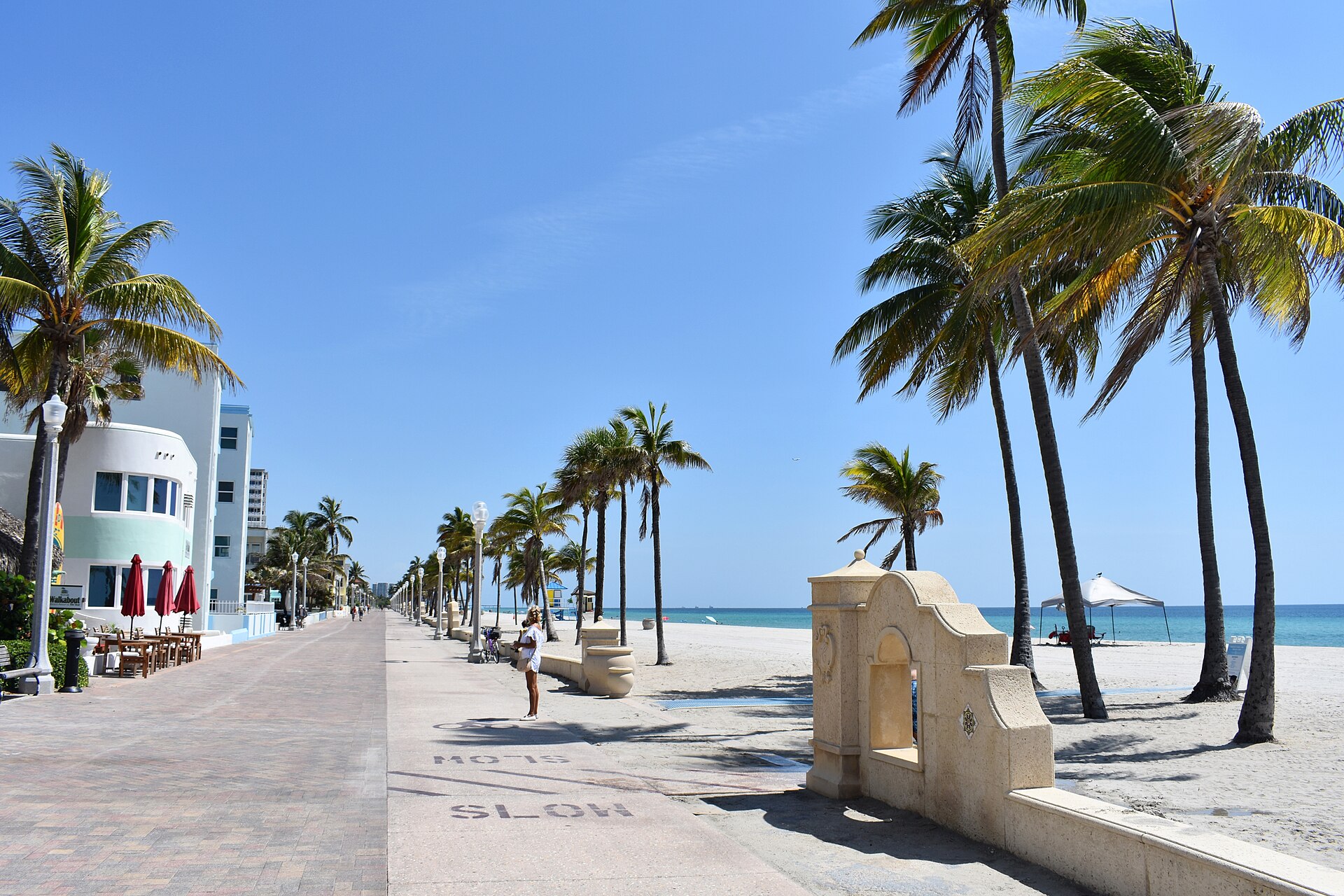
Photo: Tamanoeconomico, CC BY-SA 4.0, via Wikimedia Commons
Who Is Calling
The Census Bureau’s estimate for July 1, 2025 put Broward County at 2,013,317 people. Of residents five and older, 43.8 percent speak a language other than English at home. More than a third of the county, 36.9 percent, was born in another country. And 34.4 percent are Hispanic or Latino.
Put those figures next to a law office phone. Some of the people who dial it would rather explain their trouble in Spanish. What happens in the first thirty seconds of that call matters more than anything on the letterhead.
Where We Stand
Law Sites Inc is based in California. Nobody from this agency keeps a desk in Broward County, and we have no local history to point at.
What exists instead is a long stretch of years inside law offices. In 1979 Keith A. Bennett started a computer store in Huntington Beach, California, and aimed it at attorneys. By 1980 he was the one installing their networks, their billing, their pleading libraries and their phone systems. The corporation dates from 1998. The first law firm websites came in 2000. Across all of it, the count stands near 1,000 law firms, and for upward of 500 of those the job was a website.
Every firm we serve, in any state, gets the same arrangement: a phone call, a video call, a screen both sides can see. The crew is small, and all of it is in the United States. The designers and developers are in Muskegon, Michigan, which keeps Fort Lauderdale’s clock.
What We Would Do for a Broward Firm
Websites. The copy should sound like the people in your office, so that is how it gets written. Underneath go the schema and the search groundwork. Expect a price between $2,800 and $4,500. For hosting and upkeep, an attorney licensed by any state pays less than $40 monthly, the same amount it costs us. Included: backups, a data center where people are on shift day and night, and a human being applying each update.
Phones and intake. Somebody picks up as your firm, in your firm’s manner. The lead is typed into your case software before the caller hangs up. Then comes a warm transfer: the attorney hears who is on the line and why before saying hello. Spanish or English, whichever the caller starts in.
Case-software rescue. Plenty of offices own Clio, MyCase, PracticePanther, Best Case, Smokeball or LawPay and touch a corner of it. We rework the configuration to follow the path a file actually takes through your office. Keith does this work as a Clio Partner and an 8am Certified Consultant. He is a Certified Yelp Partner as well.
AI for law firms. First, a search for hours somebody put in that never reached an invoice, and for software that bills you each month while nobody signs in. Second, lessons for the people already on your payroll.
Our staff also posts to your social accounts each week. And when the question is about running the firm, not about the law, there is a person to ask.
No ranking is promised here, and no number of calls. As for the Florida rules on lawyer advertising, your firm’s counsel decides what wording passes. We do not.
$295, and Then You Decide
The usual starting place is the Digital Snapshot. We inspect whatever has your firm’s name on it and put the findings in writing: the site, the directory listings, the reviews, and the results a stranger in Plantation or Pompano Beach gets after typing your name into a phone. Nothing further is owed. Everything else is priced out on the pricing page.
Broward spreads its people over thirty-one cities and its courts over four courthouses. A firm’s phone is the one counter all of them can reach, in two languages at least. About Keith, or ask for the Snapshot and learn what those people find.
Questions from law firm owners in Broward County
Can a California agency serve a law firm in Broward County, Florida?
We can. Law Sites Inc is based in California and keeps no office in Broward County. The whole job runs on phone calls, video calls and a screen both sides can see, the same way it runs for firms anywhere. The designers and developers are in Muskegon, Michigan, on Eastern time. A sensible first step is the $295 Digital Snapshot.
Can callers to my Fort Lauderdale or Hollywood firm be helped in Spanish?
They can. Intake is bilingual, Spanish and English. Somebody picks up as your firm, types the lead into your case software before the caller hangs up, and makes a warm transfer to the attorney. How many people will call is not something we promise. Our part is treating each one properly when they do.
How much is a website for a Florida law firm, and how much is hosting?
A website costs between $2,800 and $4,500. Hosting with upkeep comes to less than $40 monthly for an attorney licensed by any state, the same amount it costs the agency. Backups, a data center with people on shift day and night, and hand-applied updates are included. Your firm’s counsel decides whether any wording passes the advertising rules.
Our Broward office owns Clio or MyCase and barely uses it. Do we have to begin again?
Usually not. Case-software rescue means reworking what you own so it follows the path a file takes through your office. We do it with your staff watching the same screen. Keith Bennett’s credentials include 8am Certified Consultant and Clio Partner. No particular outcome is promised. The first job is simply seeing how things are configured today.